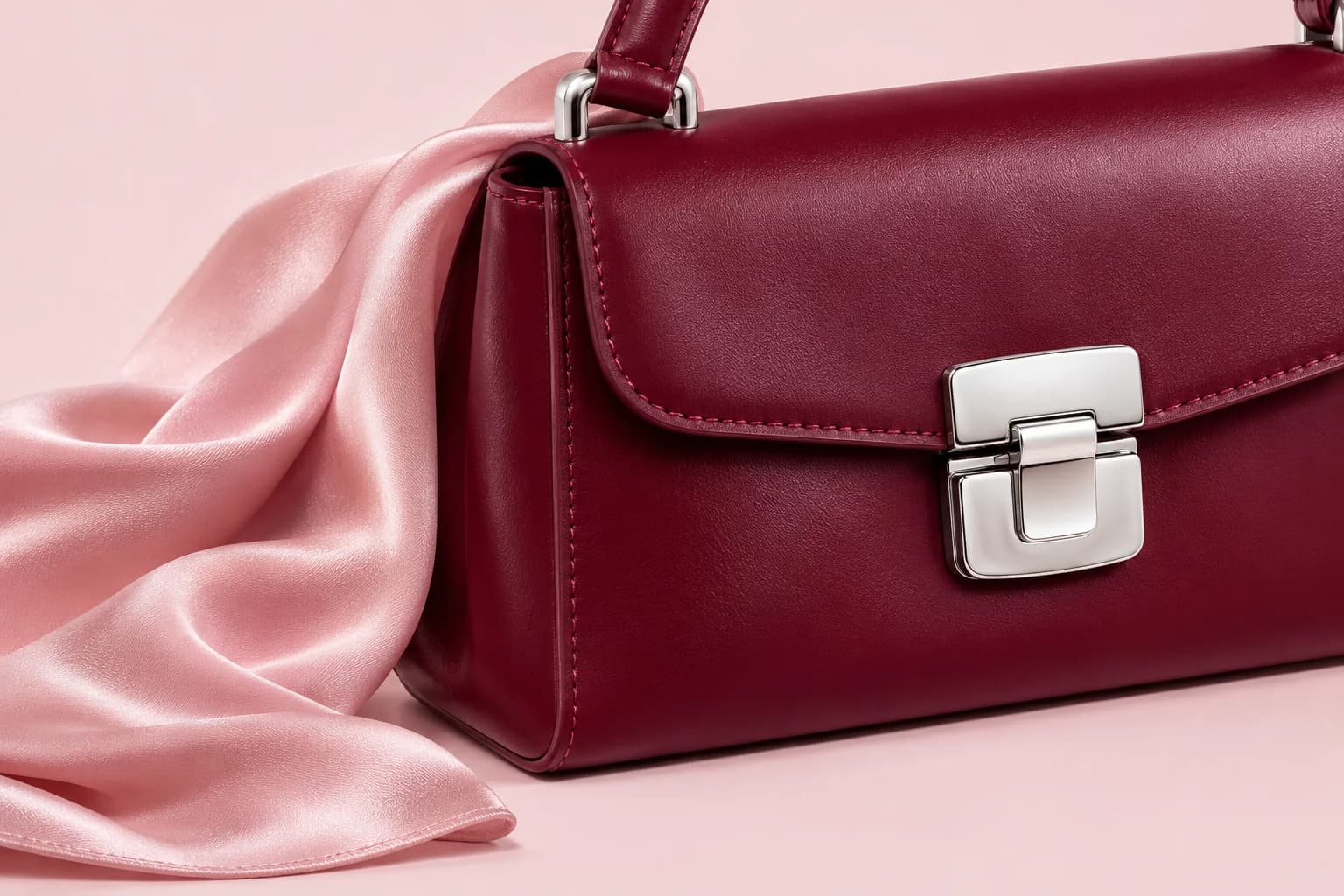
A leather surface, a polished clasp or the fall of a garment can carry the entire impression of a premium product. Producing more assets means preserving those details across more situations, rather than treating every image as a fresh interpretation.
Establish a reference that can be reproduced
Approve a small set of finished frames before scheduling a larger batch. Record the lighting direction, reflection control, surface treatment and colour reference. Include close details alongside wider compositions so the production team understands which qualities matter at each scale.
Group the work by setup
A merchandising calendar may group products by launch date; a shoot schedule may group them by material or lighting need. Reconcile both lists. Photographing reflective metal and soft fabric under the same setup can create extra correction work. Confirm samples, styling and cleaning before allocating camera time.
Reserve space for the exceptional asset
A repeatable system should leave room for a hero image that needs a different treatment. Decide which assets require bespoke attention and which can follow an approved setup. Estimate each route separately so speed is not an unspoken quality assumption.
Review a batch before expanding it
Compare product colour, reflections, edge detail and crop behaviour against the approved frame. Catch a repeated error before it spreads through the library. See our visual system guide and discuss a production schedule with Visual Matters.