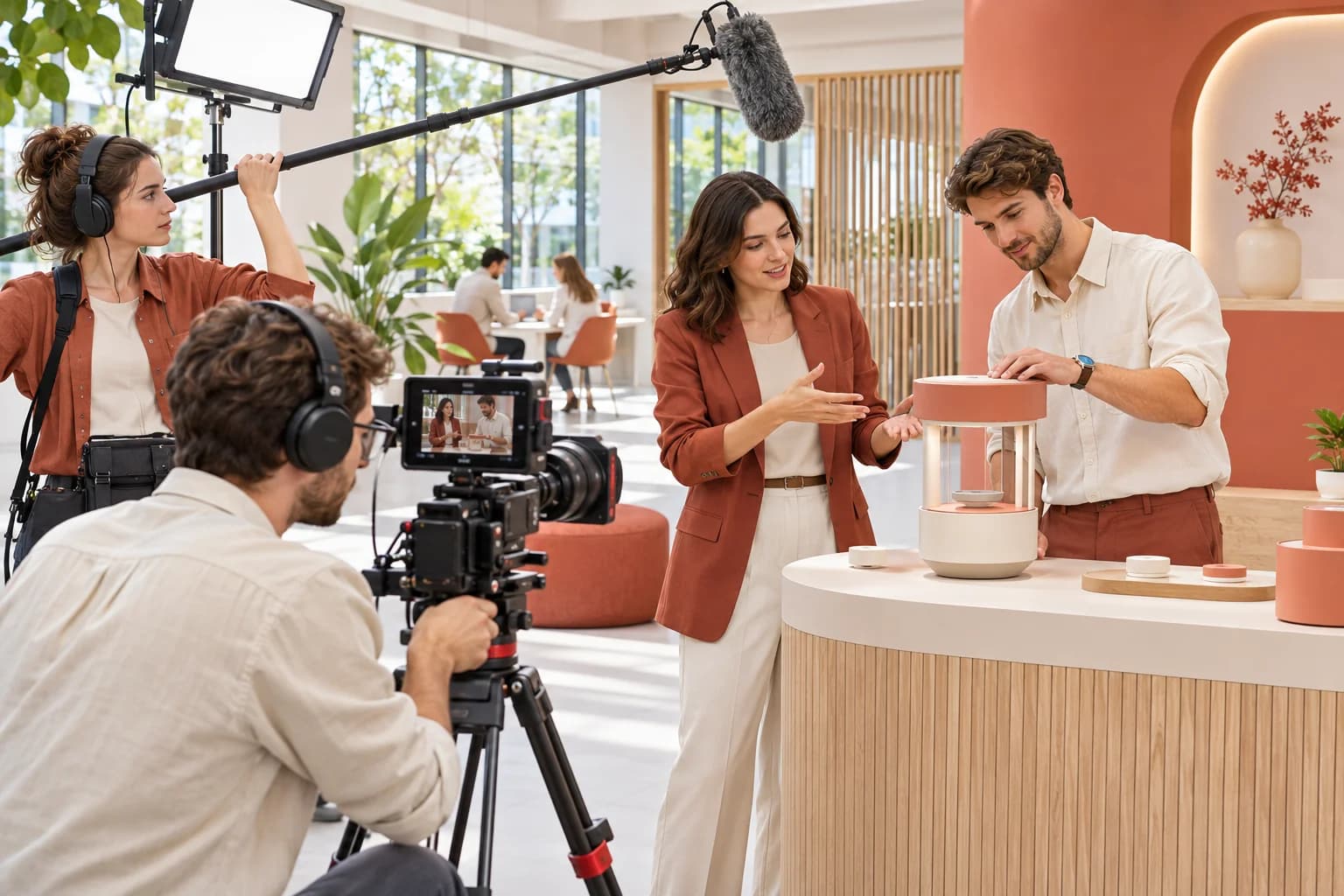
A leader says the company is collaborative. The next shot shows an empty meeting room. The edit has repeated the claim without giving the viewer a reason to believe it. Corporate film becomes more useful when the production brief connects each message to something that can actually be filmed.
Start with a question someone can answer
“Tell us about innovation” tends to produce a slogan. “What changed after the first prototype failed?” invites a specific account. Prepare questions around decisions, obstacles and observable changes. Share the themes with contributors, but leave room for their own words. A rehearsed answer may be appropriate for a formal statement; it serves a different purpose from an interview.
Build an evidence list alongside the interview
For each intended message, list the activity, detail or interaction that could support it. A product review, a technician checking a component or a conversation with a customer may carry more meaning than a corridor walk. Confirm access before promising these scenes. If an activity cannot be shown, change the storytelling approach rather than staging it as a documentary fact.
Direct the environment as carefully as the answer
Find a quiet room, check interruptions and give the contributor time to settle. Choose a background that adds context without distracting from the face. Record a complete answer, a shorter version and a moment of reflection. In the edit, protect the meaning when removing hesitations or joining sentences.
Brief the versions before filming
An internal leadership film and a recruitment cutdown may share footage, but they need different openings. List the audiences, languages and formats early. For the wider planning questions, use our Hong Kong corporate video briefing checklist. Visual Matters combines video production and post-production; discuss the people and evidence available for your film.