How to Plan a Multi-Location Brand Shoot
A practical framework for deciding which locations earn their place, protecting continuity and building a shoot schedule that survives real-world constraints.
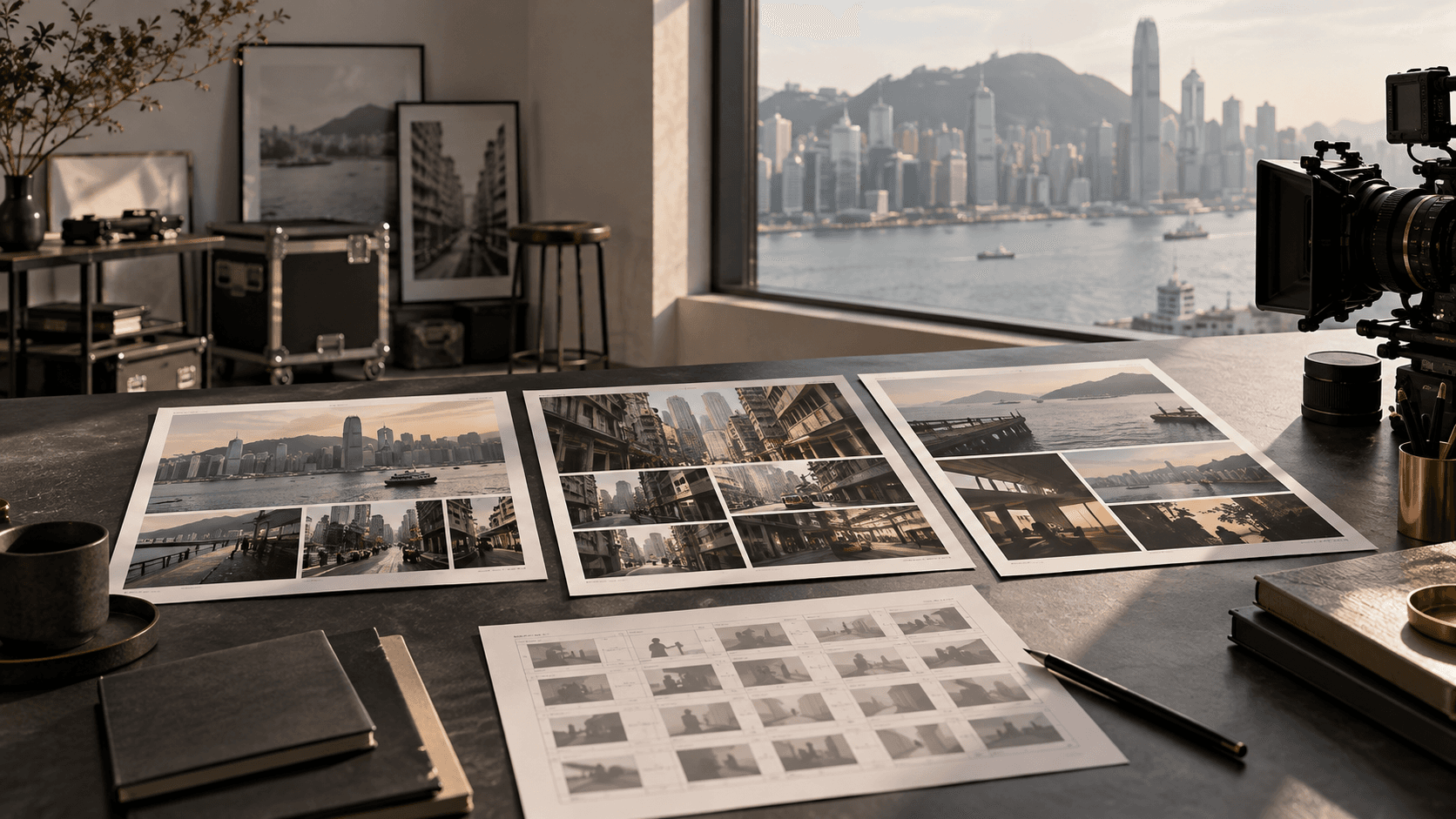
A multi-location shoot works best when every setting has a clear job in the story. Before booking a second location, decide what it communicates that the first cannot, what shots must be captured there, and how the scenes will cut together. Then test the creative plan against access, travel, light, sound, people and approval time. More places can add range, but they also create more chances for the campaign to lose visual continuity.
Our Canon EOS R8 Mark II campaign portfolio page documents a multi-location advertising film for Canon Asia, with Paradox Agency credited as lead agency. The project record lists creative planning, location scouting, casting, shooting, styling, voice-over, editing and colour among the work involved. It does not document the production's schedule, budget or performance, so the framework below is guidance for a new brief, rather than a claim about how that particular film was made.
Give each place a reason to appear
Write one sentence beside each proposed location: “This place shows…” It might establish the audience's world, reveal a product in use, shift the mood or give a transition a new visual scale. If two places perform the same role, ask whether one can carry both scenes. A location that looks impressive in a scout photograph can still be a weak choice if it adds little to the edit.
Put the story beats in viewing order, then group the actual shoot by location. This separates the audience's journey from the crew's travel. For each setting, identify the essential shot, a useful alternative and the coverage that connects it to the next scene. That makes it easier to protect the film's core idea when time gets tight. It also reveals when a “quick extra location” would require more crew movement than screen time justifies.
Test the location as a working set
Scout for production conditions as well as appearance. Check when the desired light reaches the space, whether it changes rapidly, where the camera and lighting can stand, what the background will do during takes, and whether traffic or machinery will compromise sound. Ask where talent can prepare, where equipment can be staged and how everyone will enter and leave. A location that solves the creative brief but cannot support the planned setup is not ready to book.
Confirm access and filming requirements with the property owner or relevant authority for the specific activity. In Hong Kong, requirements vary by venue and use: the government's Film Promotion and Facilitation Section offers location-filming guidance, while the Government Property Agency application makes clear that other necessary licences or permits remain the applicant's responsibility. Build the approval path into the schedule; do not assume permission for a small scout also covers a commercial shoot with lights, vehicles or public interaction.
Design continuity before the first setup
Continuity is more than matching wardrobe. Agree on the visual constants that should follow the audience between locations: product presentation, wardrobe details, prop positions, lighting direction, lens language and the camera's relationship to the subject. Then decide which differences are intentional. A daytime street and an evening interior can feel like one campaign if the movement, framing or colour relationship carries through. Forcing every place to look identical may erase the reason for using them.
Make a compact reference board with approved frames and a list of details that cannot drift. On set, capture reference stills and note the chosen takes. In post-production, compare adjacent scenes rather than grading each location in isolation. Blackmagic Design's colour guide describes shot matching and colour management tools that can help make footage from different cameras or conditions consistent; those tools still require a person to judge whether the creative look is right. Colour can smooth a transition, but it cannot replace missing coverage or repair a story beat that was never filmed.
Schedule the moves, not just the takes
Create a timeline that includes setup, rehearsal, shooting, strike, loading, travel, unloading and a buffer at each change of location. Identify the latest departure time that still protects the next scene's light or access window. The most complicated setup should not automatically go first: prioritise the shot that is least recoverable if weather, daylight or a venue constraint changes.
Give every location a primary plan and a fallback. A fallback might be a covered angle, an interior substitute or a simpler version of the scene. It should preserve the story's function, not merely fill the schedule. Decide in advance who can approve that change, especially when an agency, brand team and regional stakeholders are all involved. A crew can move quickly only when the decision route is clear.
Plan for the finished sequence
Before filming, test whether the proposed shots can form a coherent sequence. A rough storyboard or animatic can reveal an abrupt change in screen direction, missing product detail or a transition that depends on footage from a location you may lose. The goal is not to lock every creative choice. It is to identify the few shots without which the edit will not make sense.
Use this short decision check at the production meeting: What does each location add? Which shots are essential there? What access and sound conditions are confirmed? Which visual details must match? How long will the move really take? Who approves a fallback? What image connects this scene to the next? If any answer is vague, resolve it before call time rather than asking the crew to discover it on the day.
A single well-chosen setting can be stronger than several rushed ones. Multiple locations earn their place when they make the story clearer, richer or more believable within the available schedule. Visual Matters works with brands and agencies on video production, from planning through finishing. If you are shaping a campaign with several settings, share the brief with us and we can help assess which locations genuinely serve the film.